Tuesday, February 26, 2013

Reading: Ch 1


3~S Process

S

What statements can you make about the reading? What did you learn that others need to know?
  • Assignments can make teaching and learning more focused
  • They help set challenging goals and create high and clear expectations.
  • “A lesson without an assignment is a lot like a carriage without a horse and no place to go” (9).
  • Assignments should be aligned to standards, CCSS and be vehicles to prepare students for the work and routines of college.
  • Assignments involve a cycle of learning, steps that lead to a product.
  • They are evidence of outcomes
  • Helps manage instruction and pacing to ensure better outcomes
  • 3 principals of effective instruction:
    • be clear about what to teach and how
    • it's formative, allows for adjustment and scaffolding
    • it sets high expectations
S

What strategies will you try? How will you apply your learning?
  • Using assignments as a way to make steps that lead towards a learning outcome.
  • Using assignments as clear, challenging (yet achievable) goals
  • Making assignments part of my instruction as opposed to thinking about them as a separate entity.
  • First align my assignments to the standards I'm teaching to before making them part of my instruction
  • Making sure the purpose behind the assignments are explicit to students so they understand the reason behind doing them.
S
What is the source? Where did you get the information?
Assignments Matter: Making the Connection That Help Students Meet Standards by Eleanor Dougherty, Ch 1 “Why Assignments Matter” pp. 7-18

Reading: Ch 5


3~S Process

S

What statements can you make about the reading? What did you learn that others need to know?
  • A well sequenced course connects content and skills in a progression of complexity towards college and career.
  • Five design principals: thoughtful engagement, literacy as common practice, value, manageability, pressure gently applied
  • You can start to plan a course by focusing on the products you want your students to complete or one a master text.
  • Content Landscaping: collaborate with colleagues to choose a master text, then create a free association chart that ties into the master text and “landscapes” the unit.
  • Think of a course as a guild—students moving from novice to proficient and eventually to advanced (master) of concepts and skills.
S

What strategies will you try? How will you apply your learning?
  • I can use course charts to help me sequence and connect content and skills from unit to unit and visually see how the progression gets more complex and rigorous.
  • I plan to use the strategy of multiple assignments for a single product at various times throughout a course. This will help scaffold student learning towards a large and complex product.
  • I plan to vary my assignments by mixing up the “short to long, simple to complex” (101) aspects of assignments in order to progress learning as well as keeping the sequence engaging.
  • I plan to use open ended questions to guide larger assignments in a way that adds complexity and rigor to each assignment.
S

What is the source? Where did you get the information?


Assignments Matter: Making the Connections That Help Students Meet Standards by Eleanor Dougherty, Ch 5 “Sequencing Assignments to Design Units and Courses” pp. 87-108.

Reading: Ch 8


3~S Process

S

What statements can you make about the reading? What did you learn that others need to know?
  • Using analysis of data from assignments help tell a data-story of learning and progression in a classroom.
  • 3 methods to use data: 1. understand assignments in the larger curriculum and related to standards. 2. analyze the effectiveness of the assignments and instruction 3. provides feedback on the supports teachers have to create assignments.
  • Calibrating assignments is a collaborative processes between teachers and administrators to evaluate and improve the use of assignments across the board in a school as well as vertically from grade level to grade level.
  • Standards in Practice: a group of teachers analyze one teacher's task in order to improve upon instruction and use of assignments.
  • Data can reveal what conditions either help or impede teach assignments.
  • Top five problems when teaching assignments: 1. rigor and challenge 2. time 3. explicitly taught 4. aren't really assignments 5. no desire to do assignments
S

What strategies will you try? How will you apply your learning?
  • I will develop a way to collect class sets of assignments as a way to analyze the progress that is being made as well as where my instruction may be lacking.
  • I can share this information with my colleagues both as a way to get advice on improving my instruction as well as a way to inform them on their own instruction and use of assignments.
  • I will design my assignments in such a way that is rigorous, time appropriate, explicit, used as instruction, and engaging to students.
S
What is the source? Where did you get the information?


Assignments Matter: Making the Connection That Help Students Meet Standards, Ch 8 “Assignments as Data” pp153-167


Friday, February 22, 2013

Pre-Assessment


Pre-Assessment

The students will be given the following from Richard Nixon's Farewell to the White House Speech.  Below is a checklist/self evaluation the students will complete related to the text.  This evaluation introduces them to the concepts and skills they will be learning in this unit and gives the teacher a good understanding of the abilities of the students may already have coming into the unit in relation to the concepts and skills they will learn.
***
We have been generous, and we will be more generous in the future as we are able to. But most important, we must be strong here, strong in our hearts, strong in our souls, strong in our belief, and strong in our willingness to sacrifice, as you have been willing to sacrifice, in a pecuniary way, to serve in government.
….
Now, however, we look to the future. I had a little quote in the speech last night from T.R. [Theodore Roosevelt]. As you know, I kind of like to read books. I am not educated, but I do read books -- and the T.R. quote was a pretty good one. Here is another one I found as I was reading, my last night in the White House, and this quote is about a young man. He was a young lawyer in New York. He had married a beautiful girl, and they had a lovely daughter, and then suddenly she died, and this is what he wrote. This was in his diary.

He said, "She was beautiful in face and form and lovelier still in spirit. As a flower she grew and as a fair young flower she died. Her life had been always in the sunshine. There had never come to her a single great sorrow. None ever knew her who did not love and revere her for her bright and sunny temper and her saintly unselfishness. Fair, pure and joyous as a maiden, loving, tender and happy as a young wife. When she had just become a mother, when her life seemed to be just begun and when the years seemed so bright before her, then by a strange and terrible fate death came to her. And when my heart's dearest died, the light went from my life forever."
That was T.R. in his twenties. He thought the light had gone from his life forever -- but he went on. And he not only became President but, as an ex-President, he served his country, always in the arena, tempestuous, strong, sometimes wrong, sometimes right, but he was a man.
….
It is only a beginning, always. The young must know it; the old must know it. It must always sustain us, because the greatness comes not when things go always good for you, but the greatness comes and you are really tested, when you take some knocks, some disappointments, when sadness comes, because only if you have been in the deepest valley can you ever know how magnificent it is to be on the highest mountain.
…
Always give your best, never get discouraged, never be petty; always remember, others may hate you, but those who hate you don't win unless you hate them, and then you destroy yourself.

Richard Nixon - August 9, 1974


Self Assessment

Question/task related to the text
I don't know how to answer this question/complete the task
I might be able to answer or perform the task, but I wouldn't know for sure.
I am confident I can fully answer this question/complete task.
In the third paragraph Nixon quotes T.R. as writing “As a flower she grew and as a fair young flower she died.” What figure of speech is this?


Identify one other use of figurative language in the text.


Explain how the figurative language affects the speaker's message.


In paragraph 2 Nixon uses the word “educated.” What are some denotative and connotative meanings of this word.


How do the denotative/connotative meanings of the word “educated” affect Nixon's message?


Identify one word that has both denotative and connotative meanings and give them.


Look at the first paragraph, what does the word “pecuniary” mean?


Show your own personal way of doing a close reading of the text as you consider each question.


Formative Assessments (Informational)


Formative Assessments (Informational)

Learning Target: Utilize specific figures of speech with confidence in writing.
  • 411 (4 figures of speech, 1 example, 1 you don't understand)
  • Rotating clocks (create examples of figures of speech with different partners)
  • PQP (Praise, Question, Polish)
  • Dump, Clump, Lump (To review the kinds of figures of speech)


Learning Target: Evaluate the denotative and connotative meanings of a word and their effects on the overall meaning of a text.
  • Post Its on the board
  • T Chart (Denotative on one side, Connotative on the other)
  • SUPU and PUPU
  • Rotating Trio

Common Formative Assessment 1


Quiz – Figurative Language

Short answer

  1. List five figures of speech. (5pts)


  1. Write an example for TWO of the five figures of speech you listed above. Make sure you label what figure of speech you chose. (6pts)


  1. In your words, why is figurative language important? Please explain your answer. (10 pts)


Part 2
Find two uses of figures of speech in the poem below. Underline them and in the space on the right tell me what figure of speech it is. If you can't name the figure of speech, try to describe it instead. (12 pts)

One Perfect Rose

By Dorothy Parker
A single flow'r he sent me, since we met.
All tenderly his messenger he chose;
Deep-hearted, pure, with scented dew still wet -
One perfect rose.

I knew the language of the floweret;
'My fragile leaves,' it said, 'his heart enclose.'
Love long has taken for his amulet*
One perfect rose.

Why is it no one ever sent me yet
One perfect limousine, do you suppose?
Ah no, it's always just my luck to get
One perfect rose.


*Amulet; a good luck charm, something you wear to protect you against evil

Common Formative Assessment 2

Benchmark Formative Assessment 2

The Word Scope

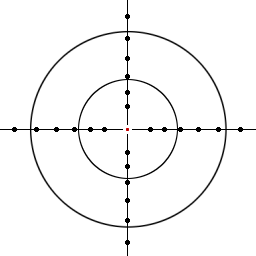
Choose a word that has both denotative and connotative meanings. Write the word on the line at the top of the page. In the center circle, include the denotative meaning (s) of this word. In the outer circle you will describe any connotative meanings the word has. Remember to use your mind, imagination and helpful resources to complete this assignment. You will need to complete three Word Scopes by (due date goes here).


________________________________